Mastering the Art of Jungle Photography
Photographing wildlife in India’s national parks is a thrilling experience. Unlike the wide-open African savannas, Indian forests are dense, dry-deciduous, and subject to dramatic lighting changes. Here are 5 essential photography tips to bring home breathtaking wildlife frames.
1. Bring the Right Lens
A telephoto lens is mandatory. A zoom range like 100-400mm or 150-600mm offers the flexibility needed to capture tight close-ups of a tiger’s eye as well as wider environmental portraits showing the ancient forest ruins.
2. Master Low-Light Settings
Safaris begin at sunrise and end around sunset. Tigers are most active during these golden hours, but the forest floor can be very dark. Don’t be afraid to push your ISO to 1600 or 3200 to maintain a shutter speed of at least 1/500s (and 1/1000s for moving animals) to keep images sharp.
3. Focus on the Eyes
Whether you’re photographing a Bengal Tiger, a Spotted Deer, or a Crested Serpent Eagle, make sure the camera’s focus point is locked onto the animal’s eye. If the eye isn’t sharp, the entire image loses its emotional impact.
4. Go Low and Silent
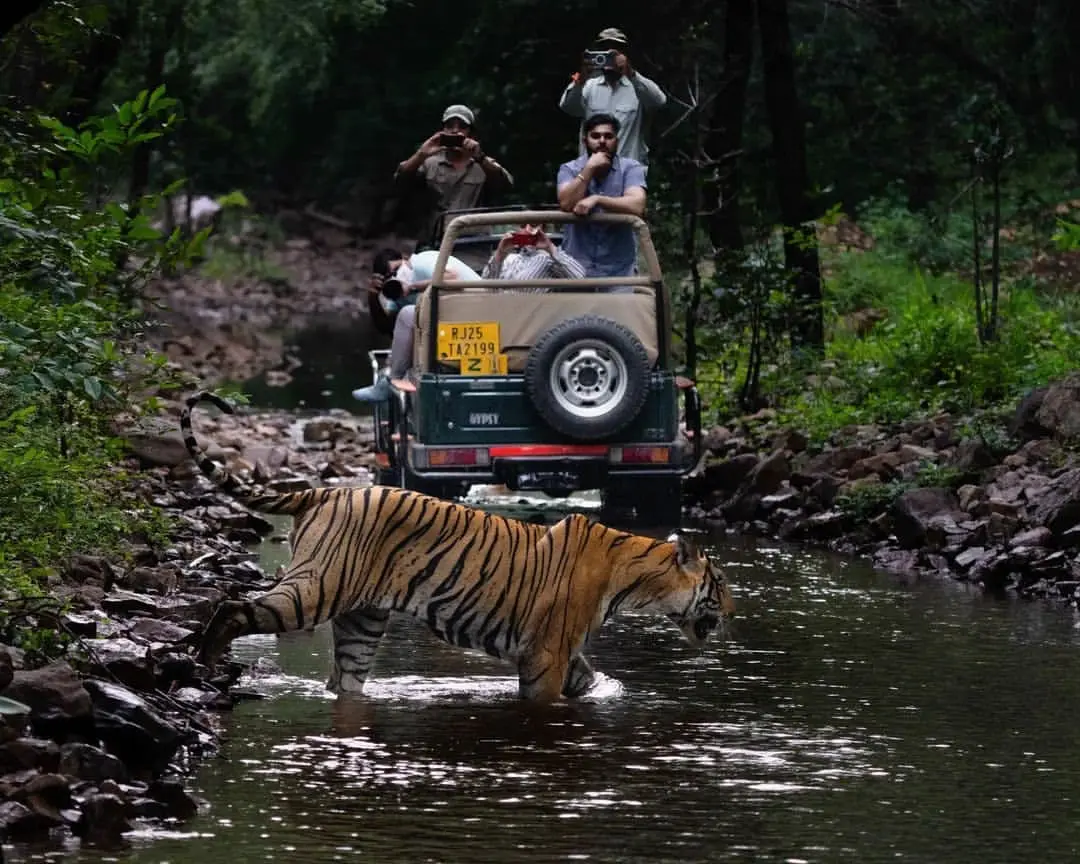
Work with your guide to position the Gypsy at a low angle whenever possible. Respect the forest: keep your camera’s beep sounds off, speak in whispers, and avoid sudden hand movements that might startle the animal.