Private Booking Assistance
Ranthambore National Park.
ABOUT THE PARK
India's Most Iconic Tiger Reserve
Ranthambore National Park, nestled at the junction of the Aravalli and Vindhya hill ranges in Sawai Madhopur district of Rajasthan, is India’s most celebrated wildlife destination. Spread across 1,334 sq km, this former royal hunting ground of the Maharajas of Jaipur was declared a national park in 1980.
What makes Ranthambore truly unique is that its tigers are diurnal — they are active during the day, giving visitors an exceptionally high chance of spotting a Royal Bengal Tiger in broad daylight, often near scenic lakes and ancient ruins. This is one of the finest examples of Project Tiger’s success.
- Home to 70+ Royal Bengal Tigers
- 10 Safari Zones with distinct terrain
- UNESCO World Heritage Fort inside the park
- 300+ bird species — a birder's paradise
RICH HERITAGE
History & Heritage
The history of Ranthambore stretches back over a thousand years. The Ranthambore Fort, built in 944 AD by the Chauhan Rajputs, perches atop a 700-foot cliff and was one of the most formidable forts in Indian history. It became a UNESCO World Heritage Site in 2013.
For centuries, the forests around the fort served as the royal hunting grounds of the Maharajas of Jaipur. It was only after independence that conservation efforts began, leading to its designation as a wildlife sanctuary in 1955 and a national park in 1980.
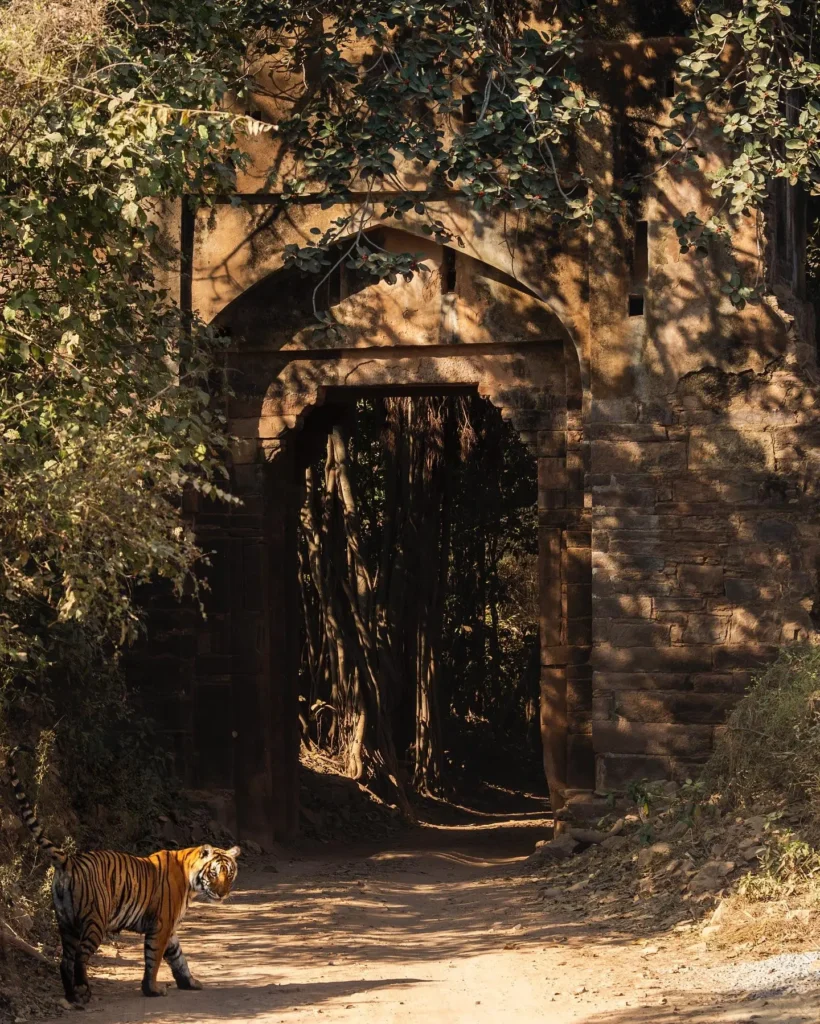
Today, the fort ruins, ancient temples, and crumbling cenotaphs scattered across the jungle create a magical landscape where history and wildlife coexist in perfect harmony. The iconic image of a tiger walking past ancient ruins is uniquely Ranthambore.
INCREDIBLE BIODIVERSITY
Wildlife of Ranthambore
Ranthambore is home to an incredibly diverse range of wildlife beyond the famous Royal Bengal Tiger.
Royal Bengal Tiger
Over 70 tigers roam the park, with the highest daytime sighting probability in India. Machali, Arrowhead, Noor — legends born here.
Sloth Bear
Ranthambore has a healthy population of Indian sloth bears, commonly spotted in Zone 1 (Kachida Valley) feeding on termite mounds and berries.
Marsh Crocodile
Large mugger crocodiles bask along the shores of Padam Talao, Rajbagh Talao, and Malik Talao — coexisting in the same habitat as tigers.
300+ Bird Species
From painted storks and kingfishers to crested serpent eagles and Indian grey hornbills — Ranthambore is a paradise for birdwatchers year-round.
SAFARI OPTIONS
Safari Types & Timings
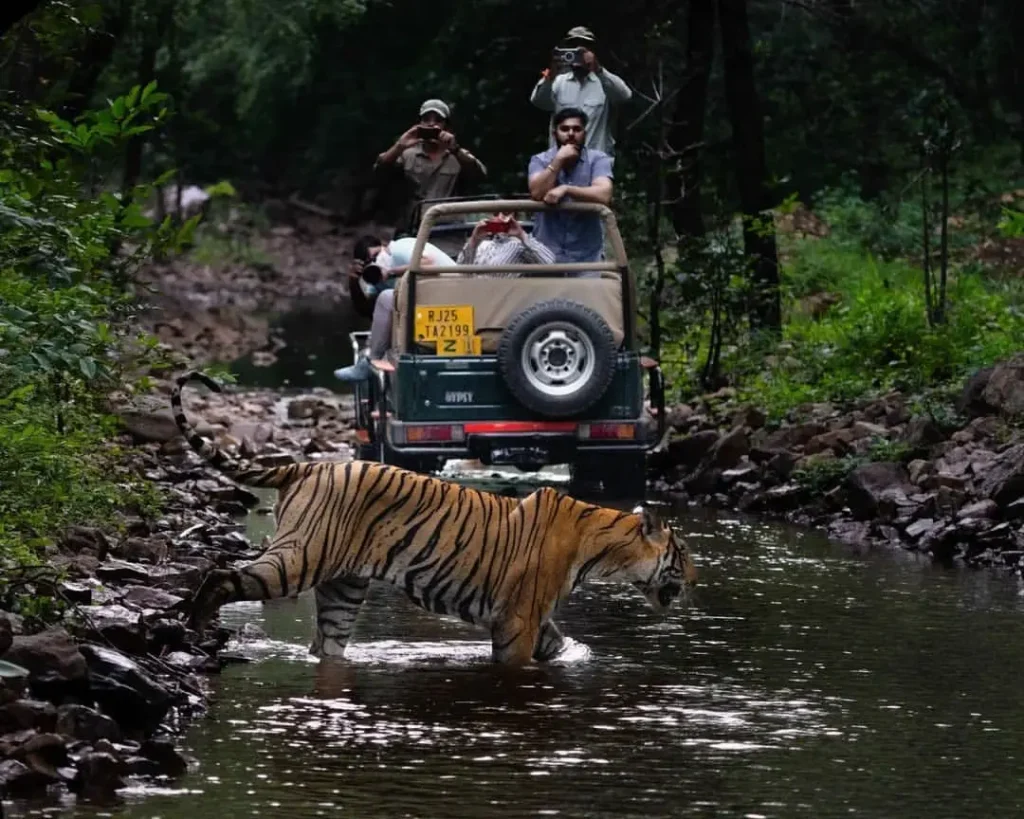
Two types of safaris operate across 10 zones, giving you the best chance to spot the majestic Royal Bengal Tiger.
Gypsy Safari (6-Seater Jeep)
Private open-top 4×4 Maruti Gypsy with a dedicated driver and naturalist guide. Best for families, photographers, and anyone seeking a personalised experience. Available in all 10 zones. • Duration: ~3 hours • Morning: 6:00 AM | Afternoon: 2:30 PM • Capacity: Up to 6 passengers • Booking: Advance permit required
Canter Safari (20-Seater Bus)
Shared open-top bus with higher seating for better visibility across the landscape. A budget-friendly option ideal for solo travellers and large groups. Available in core Zones 2–6. • Duration: ~3 hours • Morning: 6:00 AM | Afternoon: 2:30 PM • Capacity: Up to 20 passengers • Booking: Advance permit required
PLAN YOUR TRIP
Best Time to Visit Ranthambore
Winter (Oct – Mar)
Pleasant weather with temperatures between 8°C–25°C. Peak tourist season with excellent tiger sightings. Best for families and first-time visitors. Book well in advance.
Summer (Apr – Jun)
Hot days (30°C–47°C) but the best time for tiger sightings as animals gather near waterholes. Fewer crowds, better availability. Ideal for serious wildlife enthusiasts and photographers.
Monsoon (Jul – Sep)
Park is closed for visitors during the monsoon season. Heavy rainfall helps the habitat recover and rejuvenate. Tigers breed during this period, ensuring healthy populations for the next season.
GETTING THERE
How to Reach Ranthambore
By Air
Nearest airport is Jaipur International Airport (JAI), approximately 160 km or 3 hours by road. Pre-arranged airport transfers available through Wild Scape.
By Train
Sawai Madhopur Junction (station code: SWM) is just 11 km from the park gate. Direct trains from Delhi, Jaipur, Mumbai, and Kota. The most popular and convenient option.
By Road
Well-connected via NH-11. Jaipur is 180 km (~3.5 hrs), Delhi is 400 km (~6 hrs), and Kota is 110 km (~2 hrs). Private taxis and buses available from all major cities.
NEARBY ATTRACTIONS
Must-Visit Places Around Ranthambore
Ranthambore is more than just tigers — discover ancient forts, sacred temples, serene lakes and historic hunting lodges.
UNESCO Heritage
Ranthambore Fort
A 10th-century fort perched atop a steep hill inside the national park. Offers panoramic views of the jungle, lakes and surrounding Aravalli hills. A UNESCO World Heritage Site since 2013.
Historic Lodge
Jogi Mahal
One of the oldest forest rest houses in India, located at the edge of Padam Talao lake. Once a royal hunting lodge, now a heritage landmark surrounded by a massive banyan tree.
Scenic Lake
Padam Talao
The largest lake inside Ranthambore, famous for its lotus-filled waters. Tigers frequently visit its banks, making it one of the most iconic photography spots in the park.
Tiger Hotspot
Rajbagh Talao
A stunning lake surrounded by old palace ruins and dense forest. Known for frequent tiger and crocodile sightings. The ancient Rajbagh ruins add a mystical charm to the landscape.
Sacred Temple
Trinetra Ganesh Temple
Located inside Ranthambore Fort, this temple houses a rare three-eyed idol of Lord Ganesha. Devotees worldwide send wedding cards here — believed to bring blessings for new beginnings.
Rocky Terrain
Kachida Valley
A dramatic gorge landscape with steep rocky hills and dry deciduous forest. Known for leopard, sloth bear and wild boar sightings. A photographer's paradise with unique terrain.
Crocodile Lake
Malik Talao
A smaller but lively lake known for its marsh crocodile population. Rich birdlife includes painted storks, cormorants and kingfishers. Tigers visit for drinking water at dawn.
Birding Haven
Surwal Lake
A smaller but lively lake known for its marsh crocodile population. Rich birdlife includes painted storks, cormorants and kingfishers. Tigers visit for drinking water at dawn.
PRIVATE SAFARI PLANNING SERVICE
Ready to Experience Ranthambore?
Let our expert team help you choose the perfect zone, the right season, and the ideal package for an unforgettable safari experience. We handle permits, stays, and everything in between.