The Classic Wildlife Debate: Foothills vs. Dry Ruins
If you’re planning a tiger safari in Northern India, the two names that top the list are Jim Corbett National Park in Uttarakhand and Ranthambore National Park in Rajasthan. Both are legendary tiger reserves, but they offer completely different landscapes, vibes, and wildlife experiences. Here is how to choose the right one for your next trip.
1. Landscape and Setting
- Jim Corbett: Nestled in the Himalayan foothills, Corbett is a lush green landscape of tall Sal forests, grasslands (Chaur), and the sparkling Ramganga River. It feels incredibly wild, vast, and deep.
- Ranthambore: A dry, deciduous forest set against the rugged Aravalli and Vindhya hills. The park is famous for its historical ruins, including the massive 10th-century Ranthambore Fort, giving it a unique “Jungle Book” aesthetic.
2. Tiger Sighting Probabilities
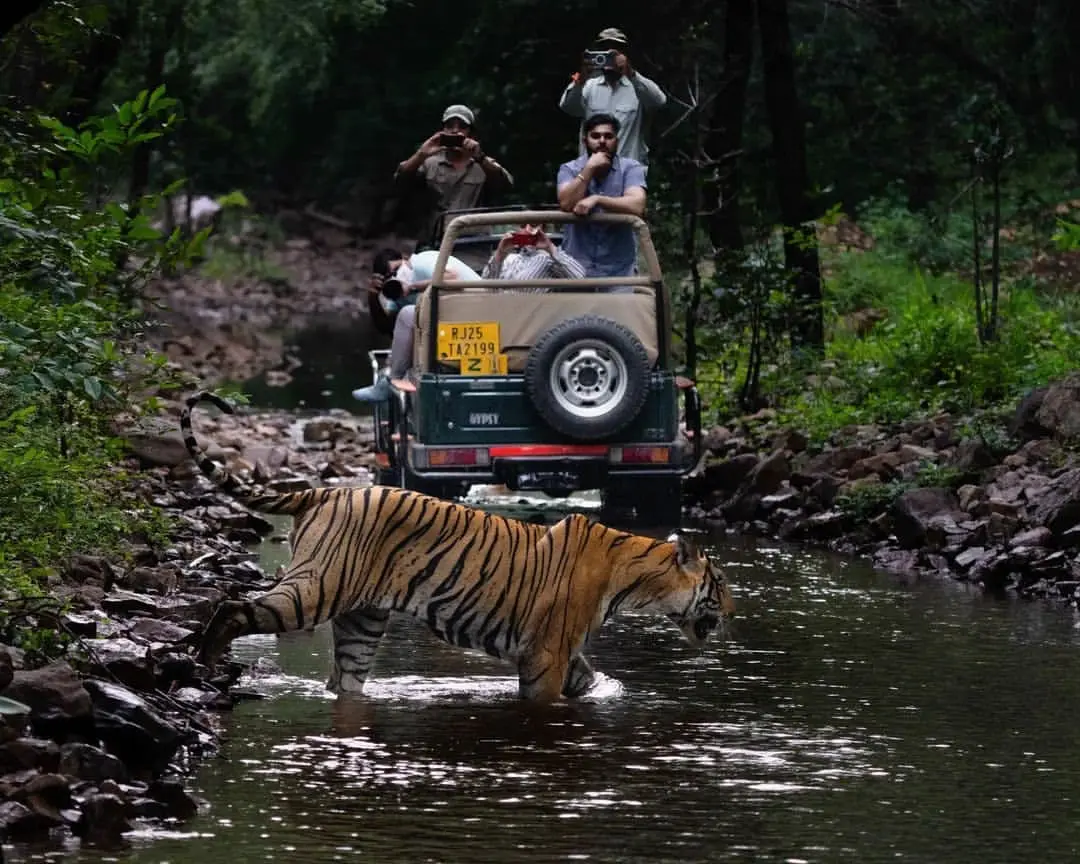
- Ranthambore: Higher chance of spotting tigers in broad daylight. Because the forest is dry and sparse, tigers gather around the lakes and are easily spotted.
- Jim Corbett: Tigers here are more elusive due to the thick foliage. However, Corbett’s tiger population is the highest in India, and the thrill of tracking a tiger in its deep forest is unmatched.
3. Key Attractions
- Jim Corbett: Famous for wild elephant herds, river rafting, and the iconic Dhikala Forest Lodge experience (staying overnight inside the core forest).
- Ranthambore: Famous for historical tiger stories (like Machali and Noor), ruins, lakes, and its close proximity to Jaipur.